
Wildfire risk is no longer a concern limited to the western states. As fire seasons grow longer and more unpredictable across the country, homeowners in nearly every region are paying closer attention to how their landscapes can either contribute to or help mitigate fire spread.
For contractors, that shift represents both a responsibility and an opportunity — the chance to design and install outdoor spaces that are beautiful, functional, and genuinely safer.
Here’s what you need to know to have informed conversations with clients, spec the right materials, and deliver fire-conscious hardscape designs that hold up under scrutiny.
Why Hardscapes are Central to Fire Prevention
Fire moves through landscapes by consuming fuel — dry vegetation, wood, mulch, debris. The more combustible material surrounding a structure, the greater the risk that embers or direct flame can ignite the building. Hardscaping disrupts that fuel chain.
Non-combustible surfaces like concrete pavers, natural stone, gravel, decomposed granite, and retaining walls do not burn. When properly installed around a structure, they create what fire experts and land management agencies call a defensible space — a buffer zone that slows or stops fire from reaching the home and gives firefighters safer conditions to defend the structure.
This isn’t just best practice. In many high-risk regions, it’s increasingly codified. Fire management agencies across the country recommend, and in some areas require, that the zone immediately surrounding a home — often referred to as Zone 0, the first five feet — be free of combustible organic materials and replaced with hardscapes: pavers, gravel, decorative stone, or concrete. Your ability to design and install those zones correctly puts you in a strong position as more homeowners and jurisdictions take fire mitigation seriously.
The Defensible Space Framework: What Contractors Should Know
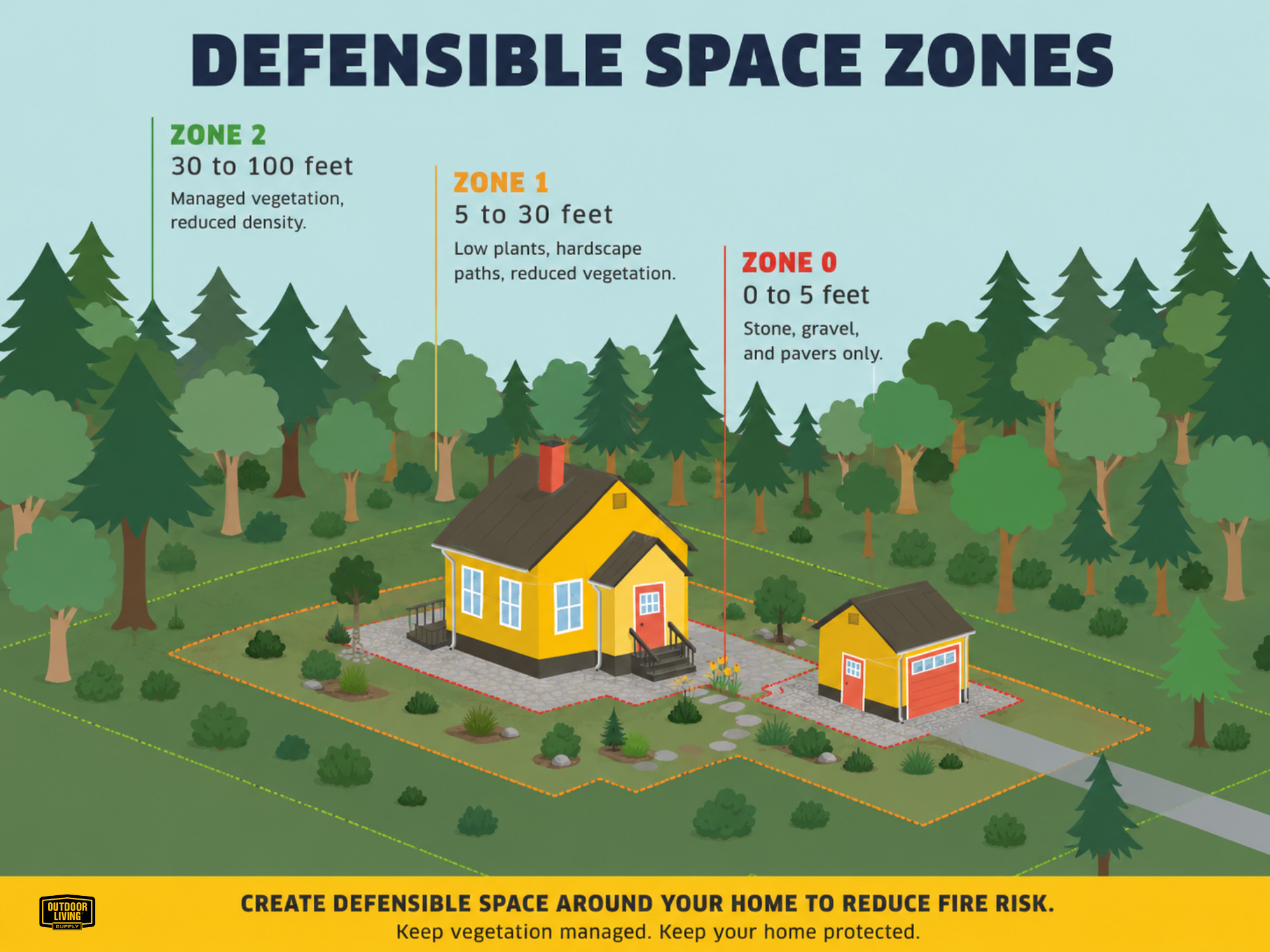
Defensible space is typically broken into layered zones radiating out from the structure. While exact requirements vary by jurisdiction, the general framework is consistent:
ZONE 0 (0-5 feet from the structure)
This is the most critical ignition-prevention zone. Wind-driven embers — the primary cause of home ignition during wildfires — accumulate closest to the structure. The goal here is zero combustible material. Organic mulch, wood chips, bark, and dense vegetation all represent ignition risk. Hardscape is the answer: pavers, flagstone, gravel, or concrete should fill this zone entirely. No exceptions.
ZONE 1 (5-30 feet from the structure)
This zone focuses on fuel reduction rather than fuel elimination. Low-growing, fire-resistant plants with good spacing, pruned trees with canopy clearance from the ground, and strategic placement of hardscape elements — patios, walkways, retaining walls — help interrupt the continuity of vegetation and reduce the likelihood that fire can travel toward the structure in an unbroken line of fuel.
ZONE 2 (30-100 feet from the structure)
This outer zone focuses on reducing vegetation density and managing fuels to slow fire’s approach. Hardscapes play a supporting role here — paths, steps, and walls that separate planted areas and reduce large unbroken expanses of vegetation.
Understanding these zones helps you position hardscape installations not just as aesthetic choices, but as strategic components of a fire-safe landscape plan.
Hardscape Materials and Their Fire-Prevention Value
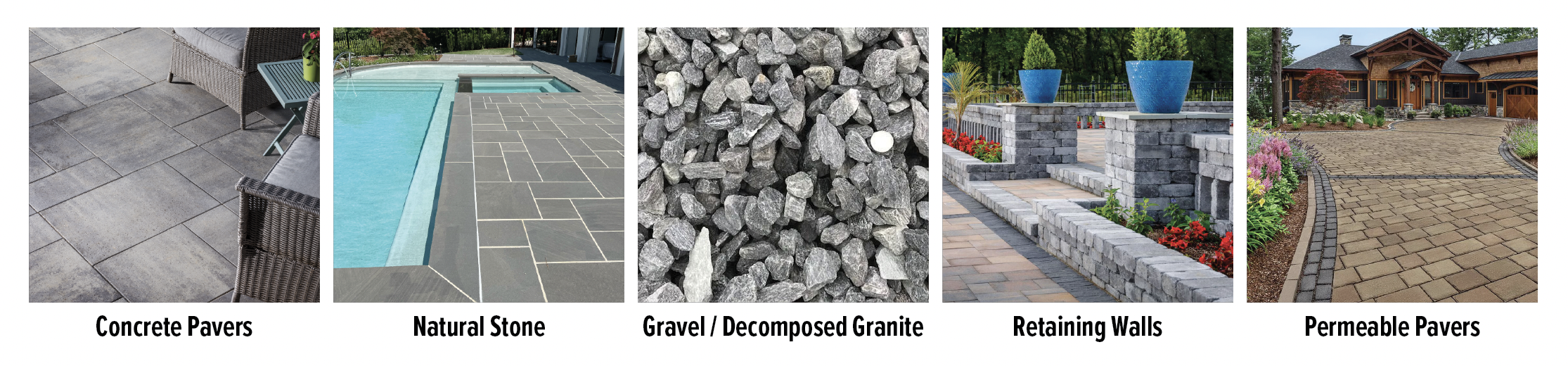
Not all hardscape materials perform equally in a fire-prevention context. Here’s how common materials stack up:
CONCRETE PAVERS
One of the most versatile and effective options for defensible zones. Non-combustible, durable, and available in a wide range of styles that complement almost any architectural aesthetic. Excellent for patios, walkways, driveways, and the immediate perimeter around structures.
NATURAL STONE (Flagstone, Bluestone, Slate, Granite)
This zone focuses on fuel reduction rather than fuel elimination. Low-growing, fire-resistant plants with good spacing, pruned trees with canopy clearance from the ground, and strategic placement of hardscape elements — patios, walkways, retaining walls — help interrupt the continuity of vegetation and reduce the likelihood that fire can travel toward the structure in an unbroken line of fuel.
GRAVEL AND DECOMPOSED GRANITE
This outer zone focuses on reducing vegetation density and managing fuels to slow fire’s approach. Hardscape plays a supporting role here — paths, steps, and walls that separate planted areas and reduce large unbroken expanses of vegetation.
RETAINING WALLS (Stone, Concrete Block, Brick)
This outer zone focuses on reducing vegetation density and managing fuels to slow fire’s approach. Hardscape plays a supporting role here — paths, steps, and walls that separate planted areas and reduce large unbroken expanses of vegetation.
PERMEABLE PAVERS
This outer zone focuses on reducing vegetation density and managing fuels to slow fire’s approach. Hardscape plays a supporting role here — paths, steps, and walls that separate planted areas and reduce large unbroken expanses of vegetation.
Incorporating Fire Prevention Into Your Client Conversations
You don’t need to be a fire mitigation specialist to have these conversations — you just need to understand the principles well enough to incorporate them into your design process and know when a client’s situation calls for deeper expertise.
A few practical talking points:
- Lead with value, not fear. Fire-conscious hardscape design isn’t about telling clients their home is at risk — it’s about delivering better, smarter outdoor spaces that serve multiple functions. A well-designed patio with a gravel perimeter, stone walkways, and a non-combustible fire pit surround is simply a better design.
- Upsell through education. Clients who understand why a gravel border around the foundation or a flagstone transition between lawn and planting bed matters are more likely to invest in the full scope of work rather than cutting corners.
- Know your regional context. Fire risk and related regulations vary significantly by geography. In high-risk regions, clients may be subject to inspections and requirements — knowing those requirements positions you as an informed resource rather than just a contractor.
A Note on Fire Pit Design
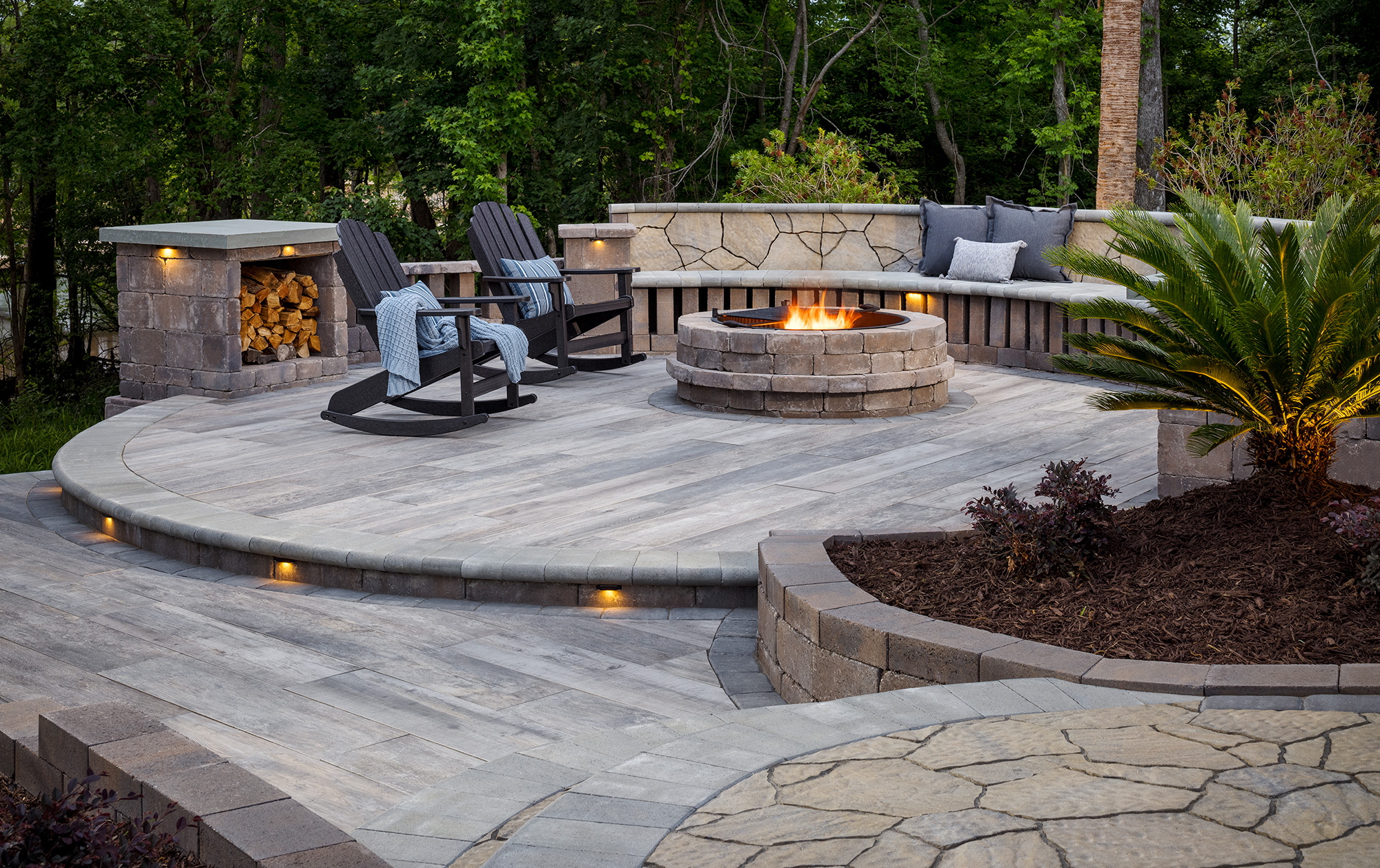
Fire pits are one of the most requested features in residential hardscape design — and when done correctly, they’re both beautiful and safe. Key considerations:
- Position fire pits at least 10–15 feet from structures, trees, fencing, and overhead obstructions. Some guidelines recommend a minimum of 25–30 feet in higher-risk environments
- Surround fire pits with non-combustible hardscape — stone, pavers, or gravel — for a minimum of several feet in all directions.
- Specify fire-rated materials for the fire pit itself. Standard pavers may crack under sustained heat; refractory brick and fire-rated products are built to handle the thermal load.
- Ensure there’s clear, clean access around the fire pit and no overhanging vegetation or structures within the ember radius.
The Bottom Line
Hardscapes have always been about creating durable, beautiful, functional outdoor spaces. Fire prevention adds another layer to that value proposition — one that’s increasingly relevant for clients across the country. The contractors who understand the principles of defensible space, can spec materials intelligently, and bring that knowledge into their client conversations will be better positioned as the conversation around fire-conscious design continues to grow.
Stop in and talk to us about what you’ve got coming up. We’re here to help you get the job done right.
Visit our Brands page to find a store near you.