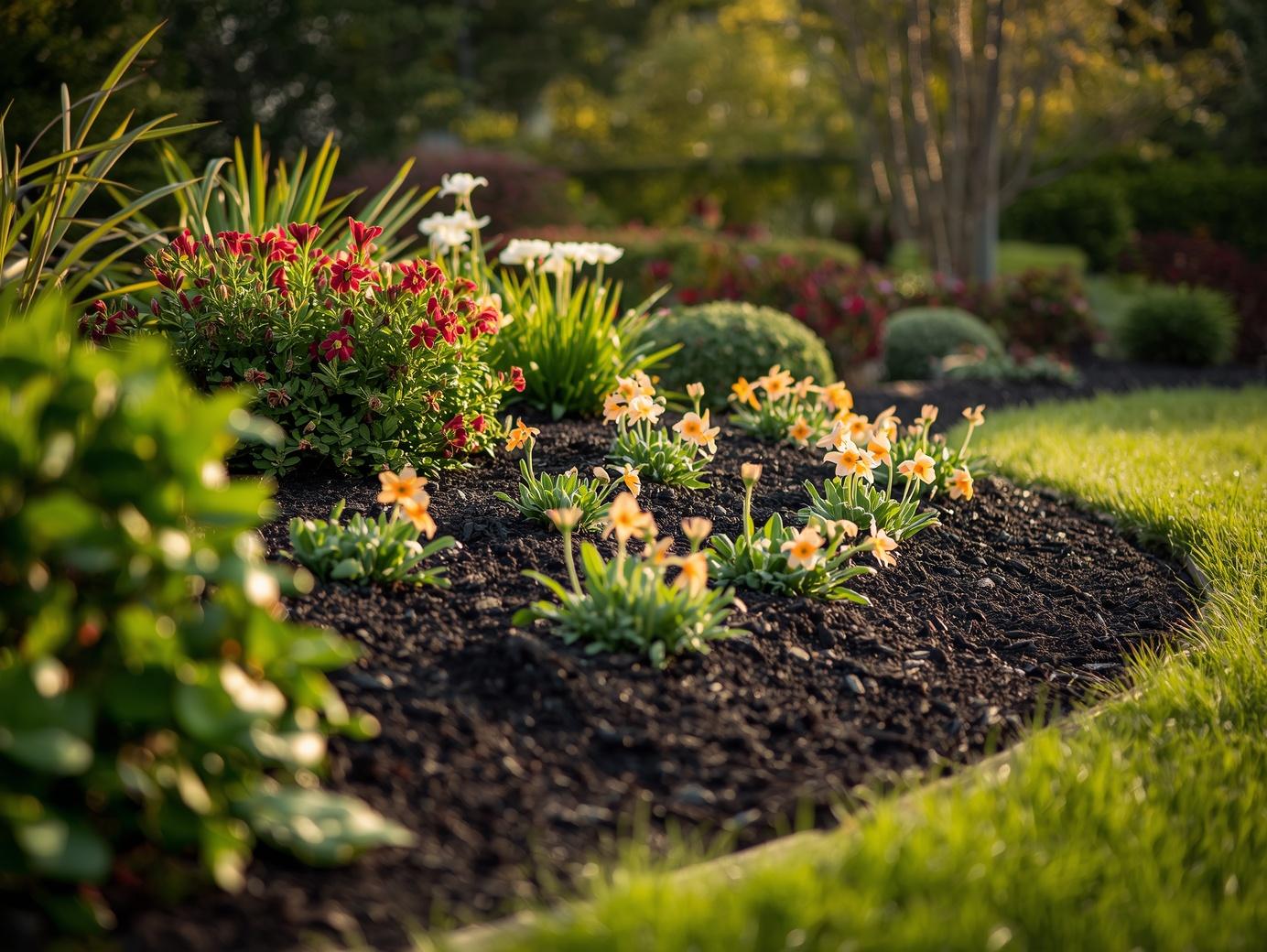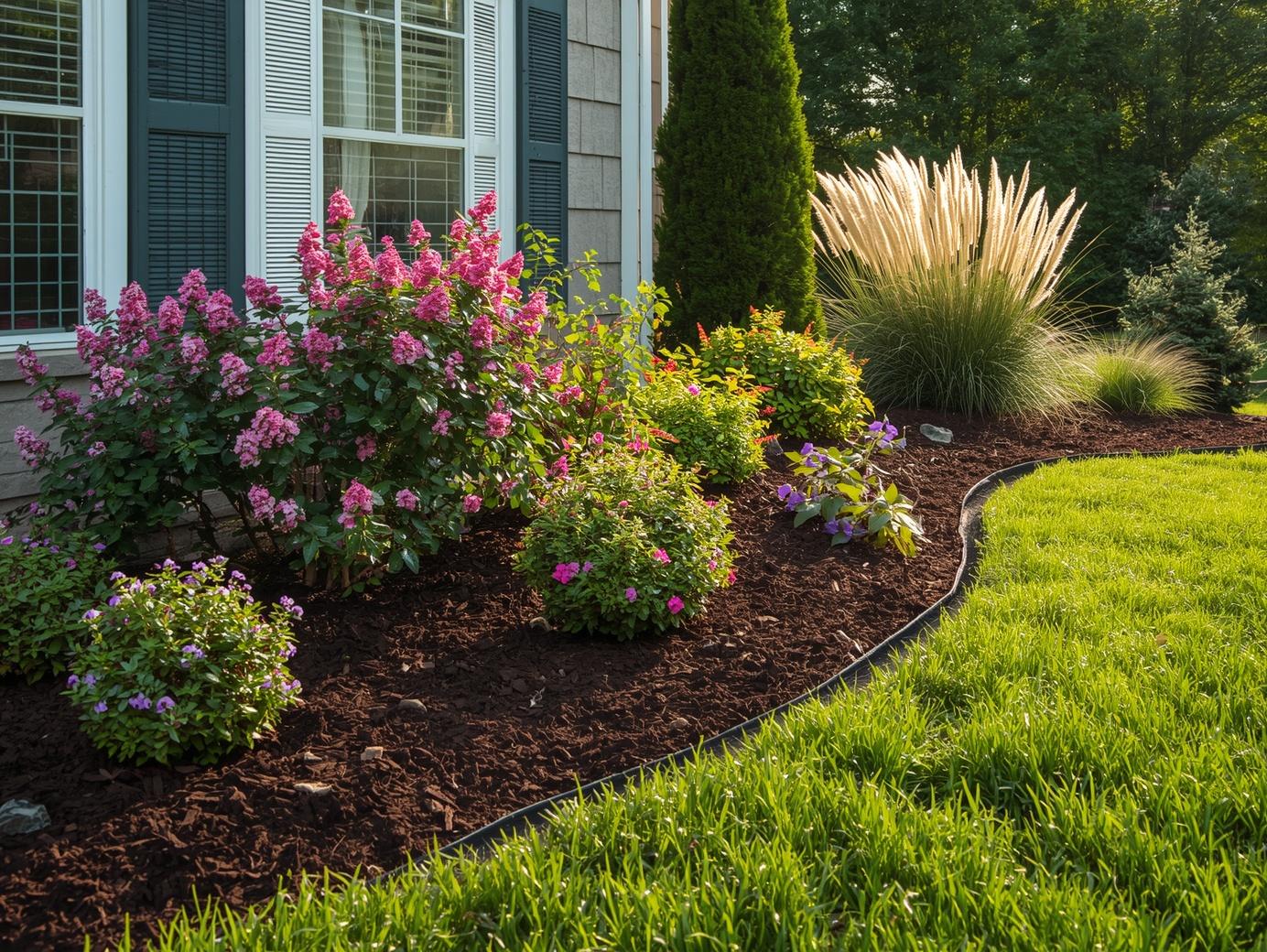

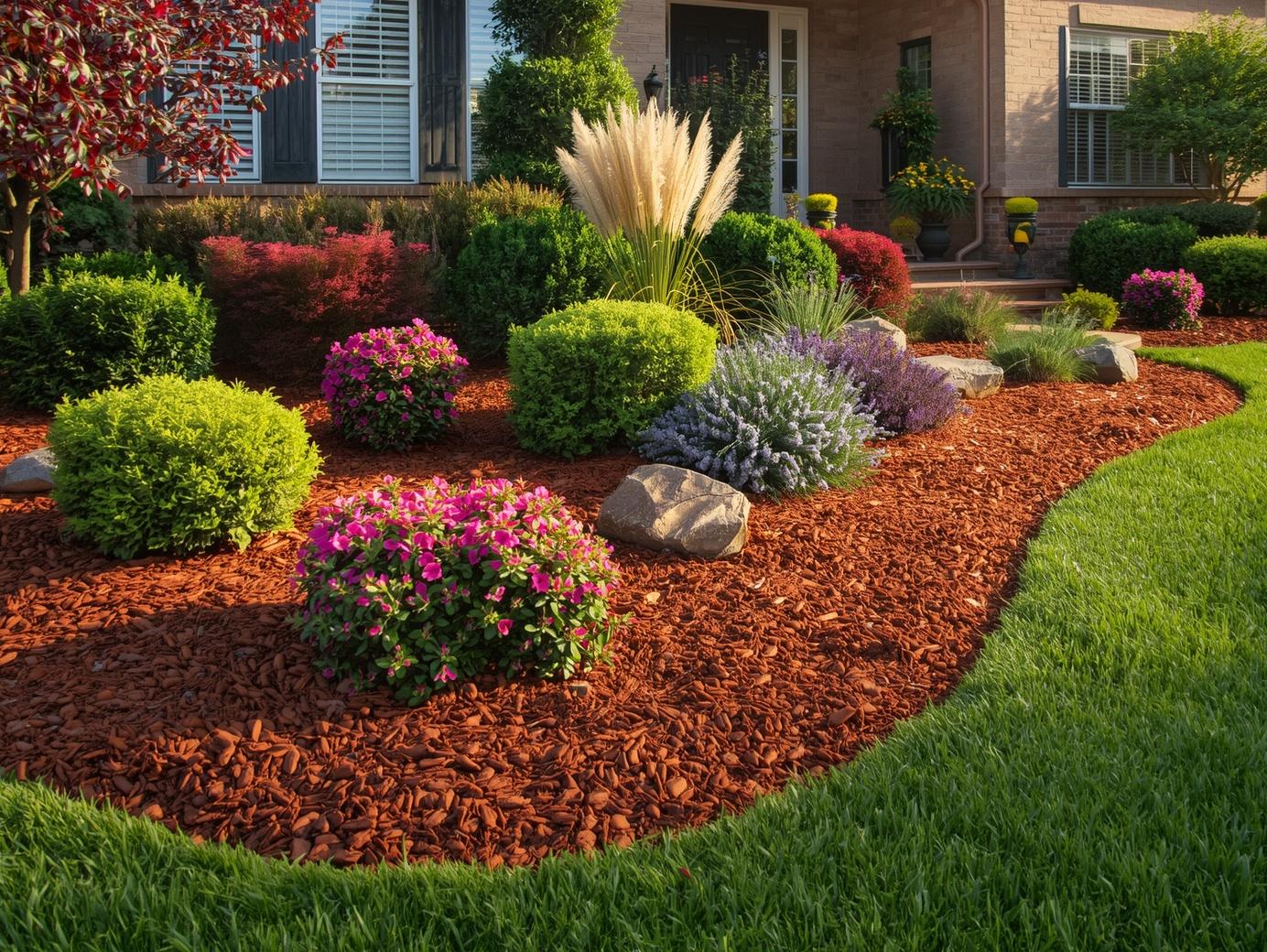
Mulch and pine straw are staples of residential and commercial landscape installs — and for good reason. They’re efficient, cost-effective, and make a finished job look sharp. But not every product is right for every application, and knowing the differences between what’s available can save you time, callbacks, and material waste. Here’s what you need to know to spec the right product for the job.
Why Ground Cover is Worth Getting Right
Clients notice ground cover — it’s one of the most visible parts of a finished install. Beyond aesthetics, the right product choice directly impacts performance and longevity:
- Moisture retention: Reduces irrigation demand and helps newly installed plants establish faster.
- Weed suppression: A properly applied layer reduces callbacks and keeps beds looking clean between maintenance visits.
- Root zone protection: Ground cover insulates plant roots from summer heat and winter cold.
- Soil improvement: Organic materials break down over time, enriching the soil and feeding your plants naturally.
- Finished Appearance: A well-mulched bed looks intentional, clean, and well cared for.
Mulch Products: Know What You’re Installing
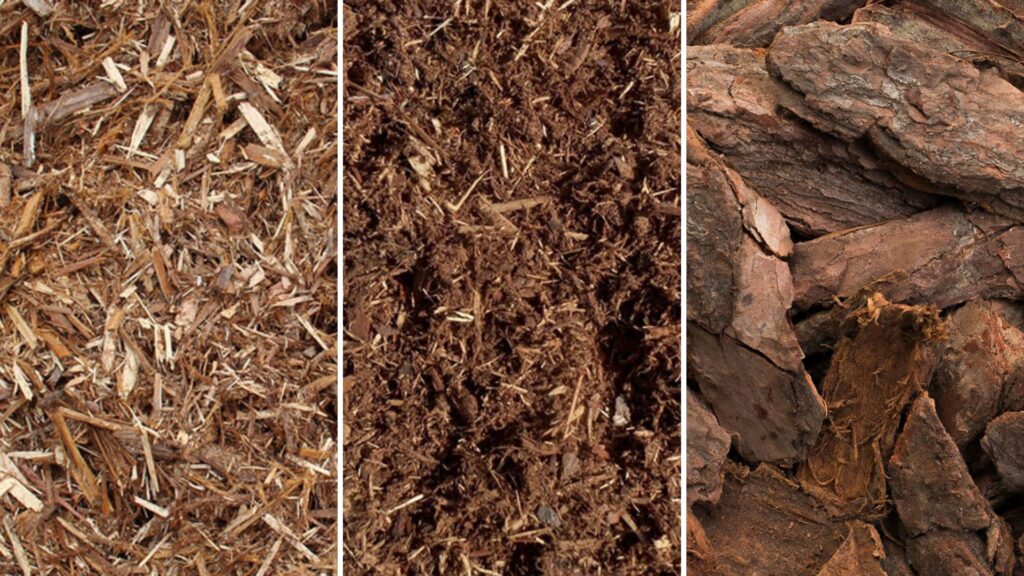
Understanding the differences between mulch products helps you match the right material to the right job — and helps you have informed conversations with clients about what they’re getting.
Shredded Hardwood Bark Mulch
Shredded hardwood mulch is one of the most common and versatile options for residential landscapes. It’s made from chipped and shredded hardwood bark, creating irregular pieces that interlock and stay in place well — even on slopes. It breaks down over time to improve soil quality and is a solid choice for most planting beds.
Triple Shredded Mulch
Triple shredded mulch goes through the shredding process three times, resulting in a finer, more uniform texture. The smaller particle size gives it a clean, refined appearance and allows it to knit together more tightly — which means better weed suppression and less displacement from rain or foot traffic. It’s a great choice for high-visibility areas like front yard beds and entryways where appearance really counts.
Pine Bark Nuggets
Pine nuggets (also called pine bark nuggets) are chunky, rounded pieces of pine bark. Because of their larger size, they allow excellent airflow and drainage — making them a favorite for plants that prefer well-drained soil, like azaleas, rhododendrons, and other acid-loving shrubs. They break down more slowly than shredded hardwood, so you won’t need to replenish them as often. Keep in mind that their weight and size can make them prone to washing out in heavy rain or on steep slopes.
Color Options:
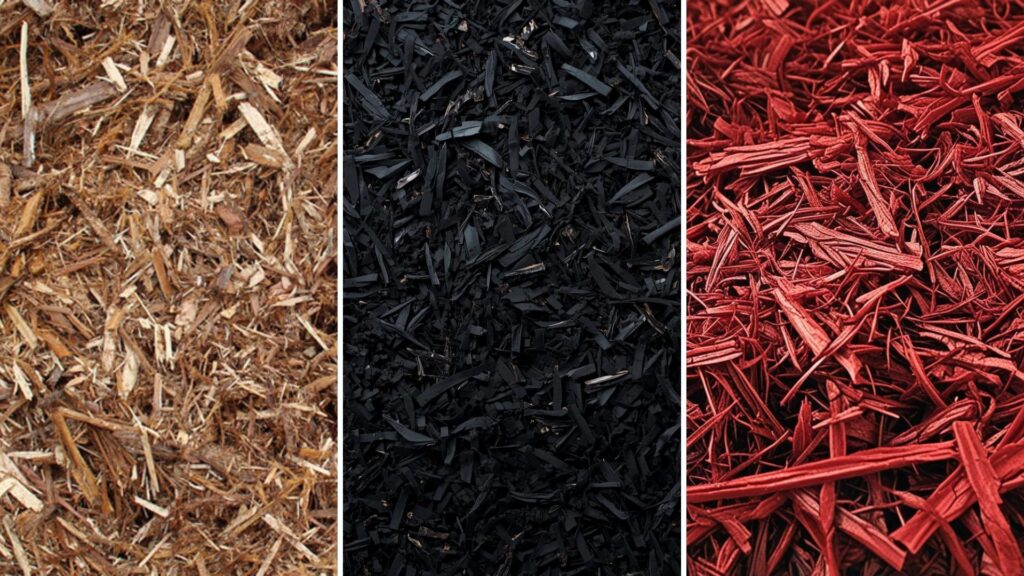
Most shredded and triple shredded products are available in Natural (Undyed) and Dyed. Color is largely a client preference and design decision, but here’s what to know from an installation standpoint:
Natural (Undyed)
Natural mulch is simply processed wood or bark with no added dye. It has a warm, earthy brown tone that blends seamlessly with any landscape. Over time it will fade and gray as it weathers — this is completely normal and can be refreshed with a new top layer each season. It’s the most “neutral” choice and works well in any style of landscape.
Dyed Mulch (Red, Black & More!)
Dyed mulch is a popular choice for homeowners who want a more polished, intentional look. Colors vary by location and supplier, but red and black are the most common — red for a bold, high-contrast look that makes beds pop, and black for a sleek, modern appearance that works especially well in contemporary landscapes. Both create strong contrast against green foliage and colorful blooms.
The dye holds well but will fade with UV exposure over time — a light annual refresh keeps beds looking their best. When purchasing, look for products that use colorfast, non-toxic dyes.
Pine Straw: Efficient, Versatile, and Underutilized in Some Markets
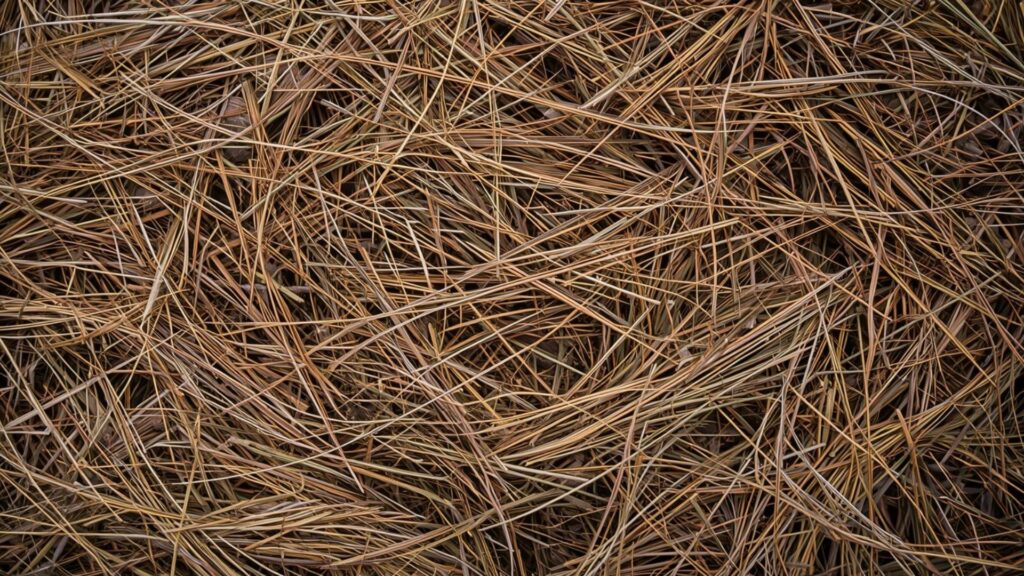
Pine straw is a staple in many markets — particularly across the Southeast — and for good reason. It’s fast to install, performs well in a wide range of conditions, and clients who know it tend to request it specifically. If you’re not already working with it regularly, it’s worth adding to your material repertoire.
Here’s why pine straw deserves a place in your yard:
- Fast to spread: Lightweight bales cover ground quickly. Experienced crews can move through pine straw installs efficiently.
- Excellent on slopes: The interlocking needles resist washing and displacement far better than most mulch products — a significant advantage on graded or sloped sites.
- Right for acid-loving plants: As it decomposes, pine straw slightly acidifies the soil — beneficial for azaleas, camellias, blueberries, hollies, and similar plants.
- Slower decomposition: Breaks down more slowly than shredded hardwood, which can extend time between maintenance applications.
- Clean, natural appearance: Works especially well in naturalistic plantings, woodland gardens, and traditional residential landscapes.
- Shredded and triple shredded mulch: 2–3 inches for established beds. 3 inches for new installs where weed pressure is higher.
- Pine nuggets: 2–3 inches. Avoid over-applying as the chunky texture can create air pockets that dry out roots.
- Pine straw: 3–4 inches. The looser, more porous nature of the needles means you need a bit more depth to achieve equivalent weed suppression.
- Keep mulch away from tree trunks and plant crowns: Pull back 2–3 inches from the base of trees and shrubs. Volcano mulching is one of the most common mistakes on residential installs and causes long-term damage to plants.
- High-end residential or commercial — presentation is priority: Triple shredded, black or red depending on design direction.
- Standard residential installs:Shredded hardwood, natural or color per client preference.
- Sloped or graded sites: Shredded hardwood or pine straw. Avoid nuggets.
- Acid-loving plant beds: Pine nuggets or pine straw.
- Large installs where speed matters: Pine straw for fast coverage; triple shredded for efficiency when appearance is critical.
- Maintenance programs where longer intervals are preferred: Pine nuggets or pine straw for slower breakdown and less frequent replenishment.
Handling Common Client Quetions:
Is dyed mulch safe?”
Quality dyed mulch products use non-toxic, colorfast dyes that are safe for plants, people, and pets. Reassure clients and steer toward reputable products — cheap bulk mulch can use lower-quality materials and dyes that don’t hold as well or may contain contaminants.
Does mulch attract termites?”
A common concern, especially near foundations. Wood-based mulch can provide habitat for insects, but the risk is manageable with proper installation. Keep mulch pulled back 6 inches from the foundation and avoid over-applying near structures. Pine straw and pine nuggets are generally considered lower risk than hardwood mulch.
How often will this need to be refreshed?”
Most homeowners refresh mulch once per year — typically in spring before the growing season kicks in. Over time, organic mulch breaks down and enriches the soil, so you’re not just maintaining appearances, you’re also feeding your landscape.
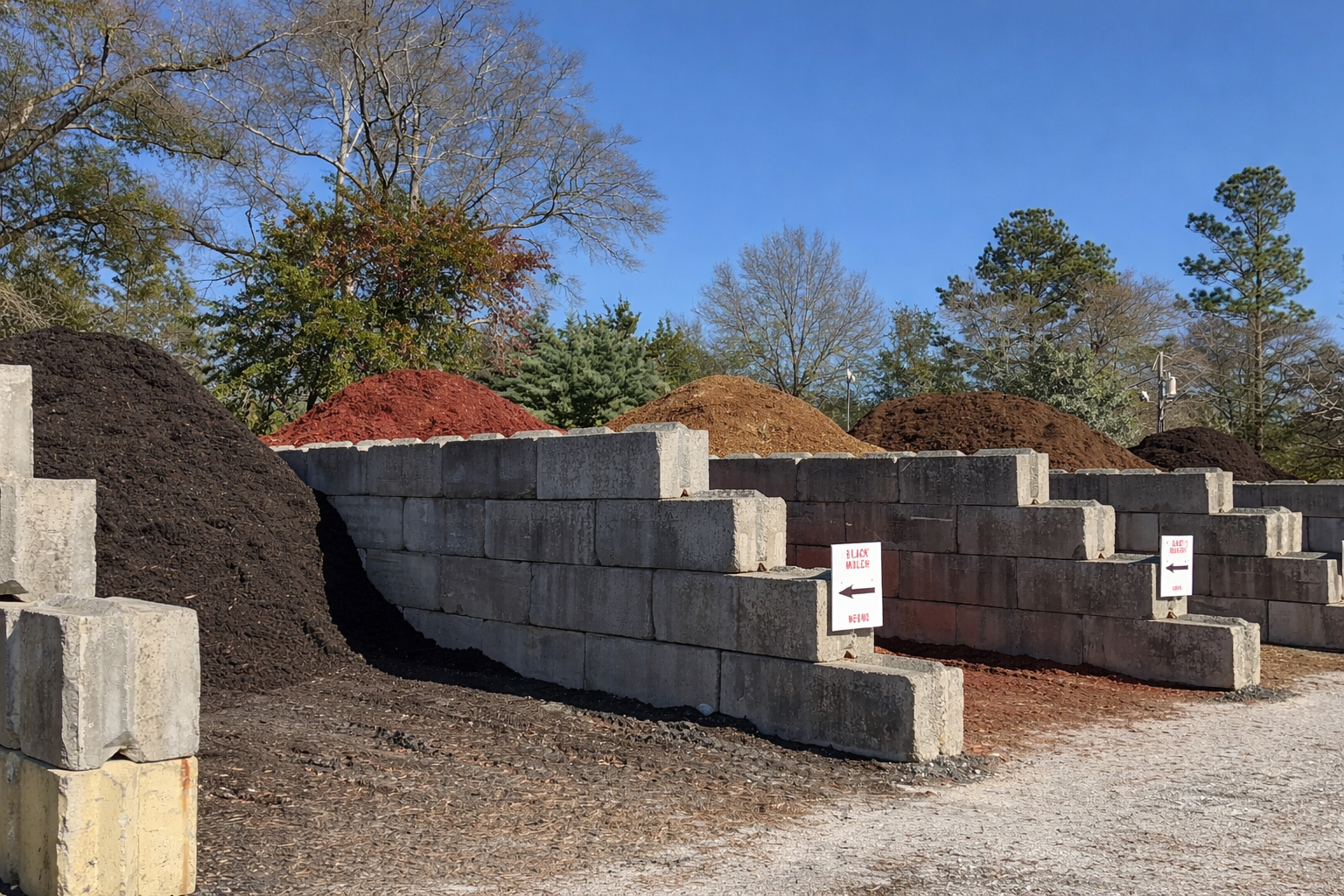
Come See What We Have in Stock
We stock a full range of mulch and pine straw products — shredded hardwood, triple shredded, pine nuggets, and pine straw, in natural, red, and black where applicable. Our team knows the products and can help you match the right material to your job specs.
Stop in and talk to us about what you’ve got coming up. We’re here to help you get the job done right.
Visit our Brands page to find a store near you.