
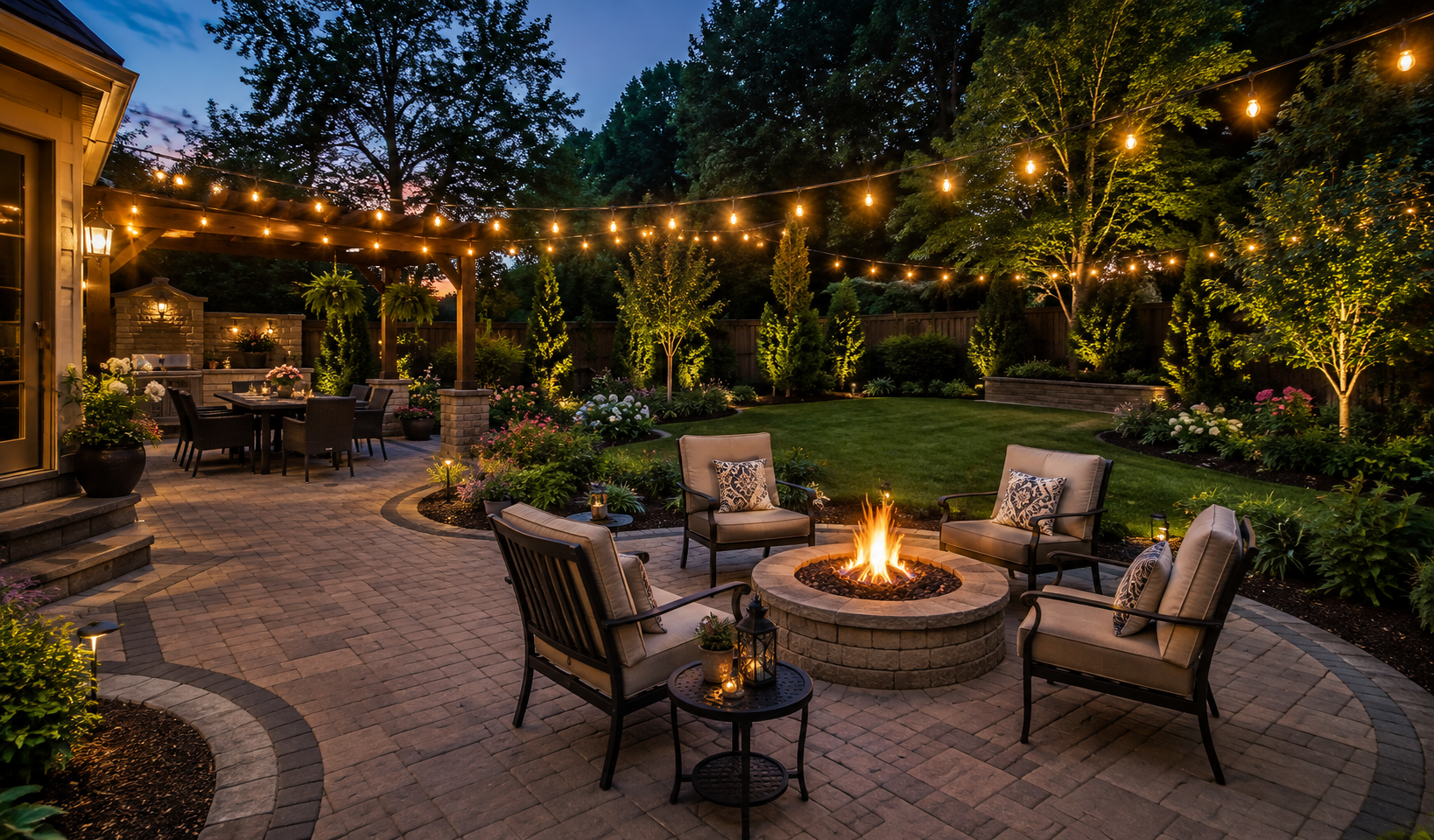
Chasing Daylight: How Fire and Lighting Keep Crews Busy Past Summer
Every season has its rhythm. The summer rush of patios, walls, and full hardscape builds eventually tapers, the days get shorter, and the phone calls slow down. For a lot of crews, that’s the cue to start bracing for the seasonal lull.
It doesn’t have to play out that way. The shift into fall isn’t the end of the selling season — it’s the start of a different one. Fire features and landscape lighting are two of the most reliable ways to keep revenue moving and crews working when the big-build inquiries start to thin out. They’re faster to install, they land well with clients who’ve just spent all summer enjoying a space they don’t want to give up, and they work two ways — built into the projects on your board now, or added onto the ones you’ve already finished.
Here’s how to lean into the season instead of waiting it out.
TThe Fall Opportunity Is Real — and It’s Being Left on the Table
When temperatures drop, most homeowners assume it’s time to shut the patio down and head indoors. That assumption is exactly the opening. The client who thinks the season’s over is the client who hasn’t yet been shown what a fire feature and good lighting can do for those cool evenings.
That’s a conversation you’re positioned to start. The demand is there — homeowners consistently say they want more time outside, to relax and to entertain — but many don’t realize how much longer their space stays usable with the right additions. Season-extension work meets that demand directly, and it fills the exact window where your larger installs begin to slow.
Two Ways to Play It: Build-In and Add-On
Fire and lighting fit the back half of the year in two distinct ways — and the strongest crews work both angles at once.
Build-In: For new projects, or ones already underway, bring fire and lighting into the conversation now. It’s easier to plan the details while you’re already on site — the trenching, wiring, and layout are far simpler to handle before the hardscape goes down than to retrofit later. Building it in from the start turns a good project into a more complete outdoor living space, and raises the value of the job you’re already doing.
Add-On: Fire and lighting don’t have to wait for a new project. Look back at the patios and hardscapes you’ve already completed and give those clients a reason to bring you back. A fire feature or lighting package can turn a finished project into new fall revenue without starting from scratch — and you already know the space, the client, and the site.
Between the two, you’ve got a way to keep revenue moving whether the work is in front of you or behind you.
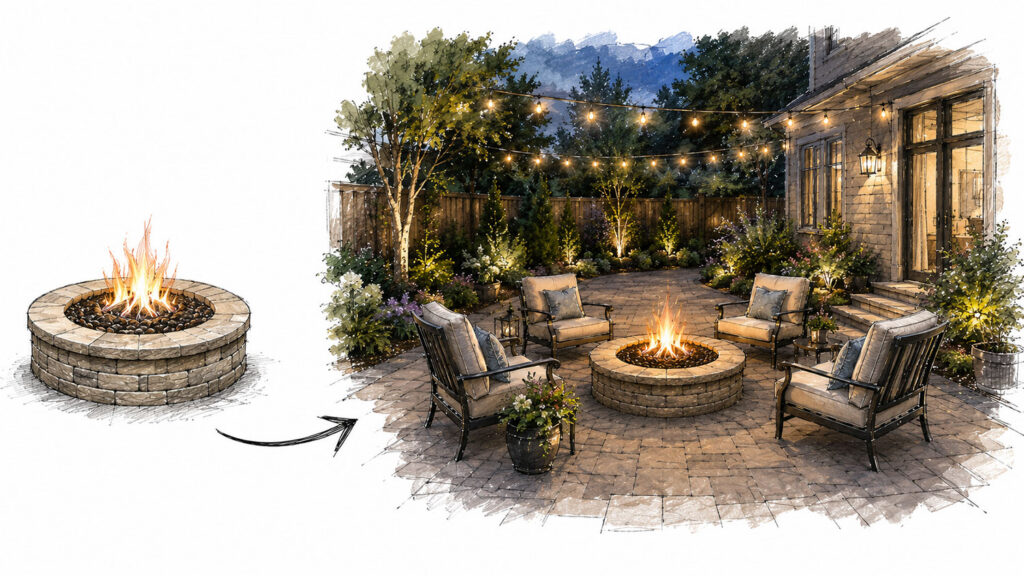
Why These Projects Fit the Season
Beyond the timing, fire and lighting suit the back half of the year for practical reasons that matter to how you run a crew.
- Shorter installs, faster turnaround. Compared to a full patio or wall build, many fire and lighting projects are quicker to complete. That means more jobs cycled through in a compressed season and less exposure to the weather delays that stall bigger excavation-heavy work.
- Approachable price point. For a homeowner not ready to commit to a large spring build, a fire feature or lighting package is an easier yes. It keeps the relationship active and the revenue coming, and it often seeds the larger project down the line.
- Design-forward and satisfying. These installs deliver a dramatic visible result fast — the kind of before-and-after that photographs well, earns referrals, and builds your portfolio heading into next season.
Fire Features: Matching the Install to the Client
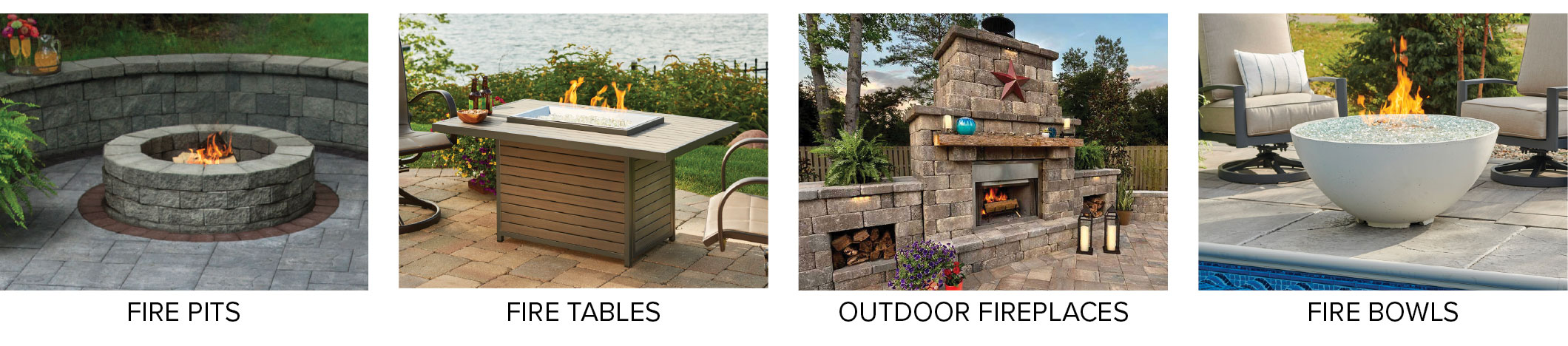
Fire is the anchor of cool-weather outdoor living, and knowing the format options helps you steer the conversation toward the right fit for each client’s space and budget.
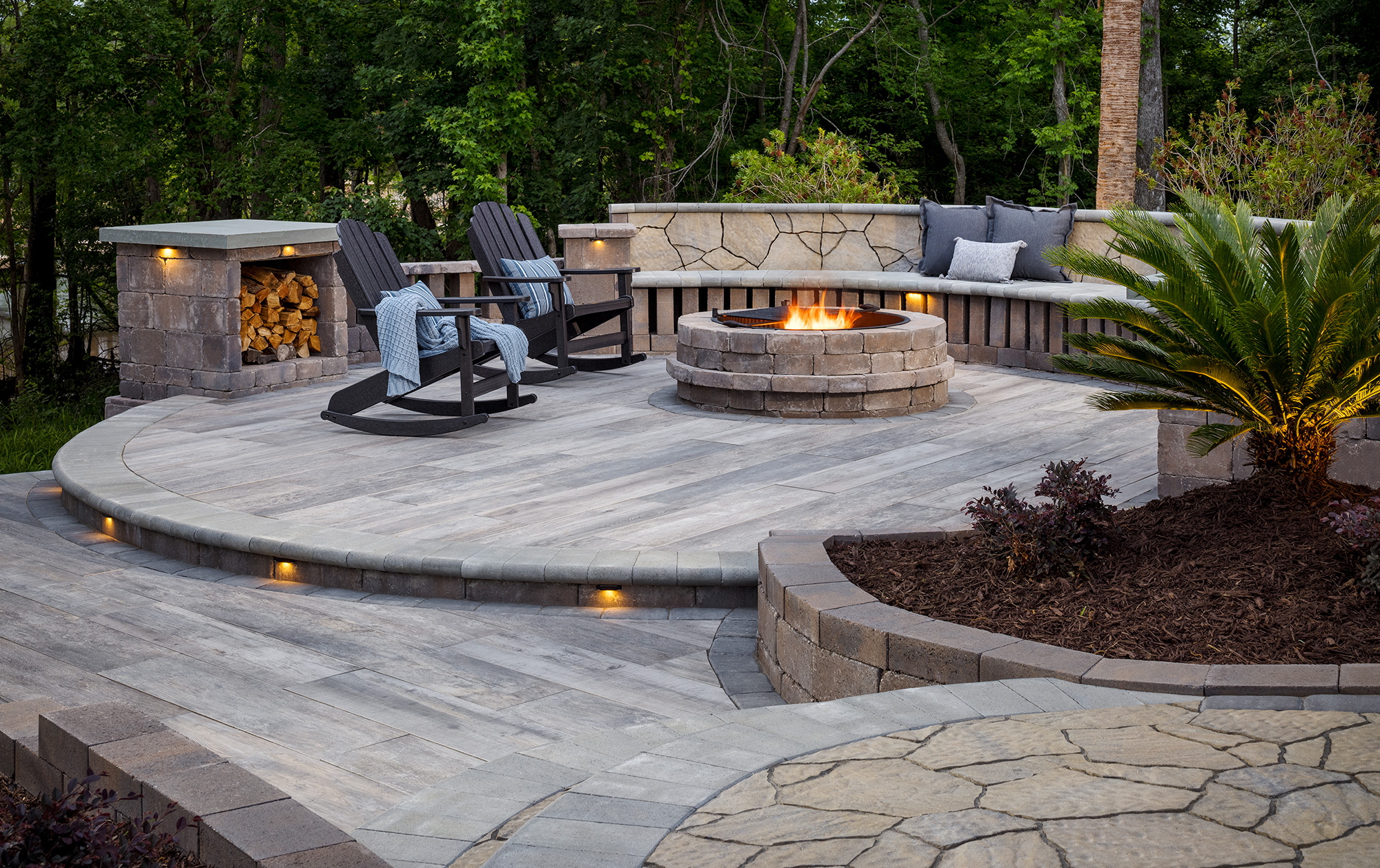
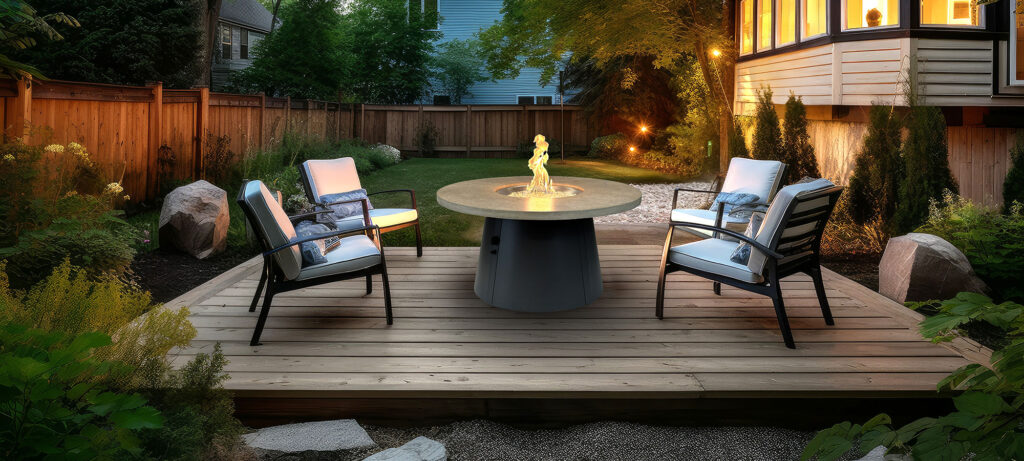
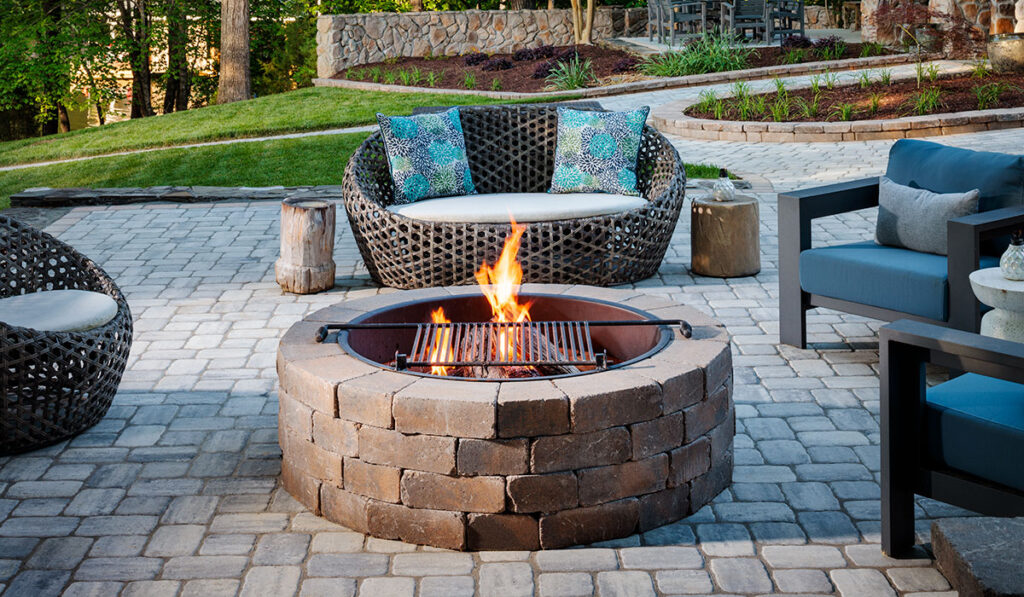
- Fire pits — The social, open-gathering option. Straightforward to install and universally appealing; a dependable starting point for most residential clients.
- Fire tables — A more contemporary, furniture-forward profile for clients whose style leans modern. Same warmth, sleeker footprint.
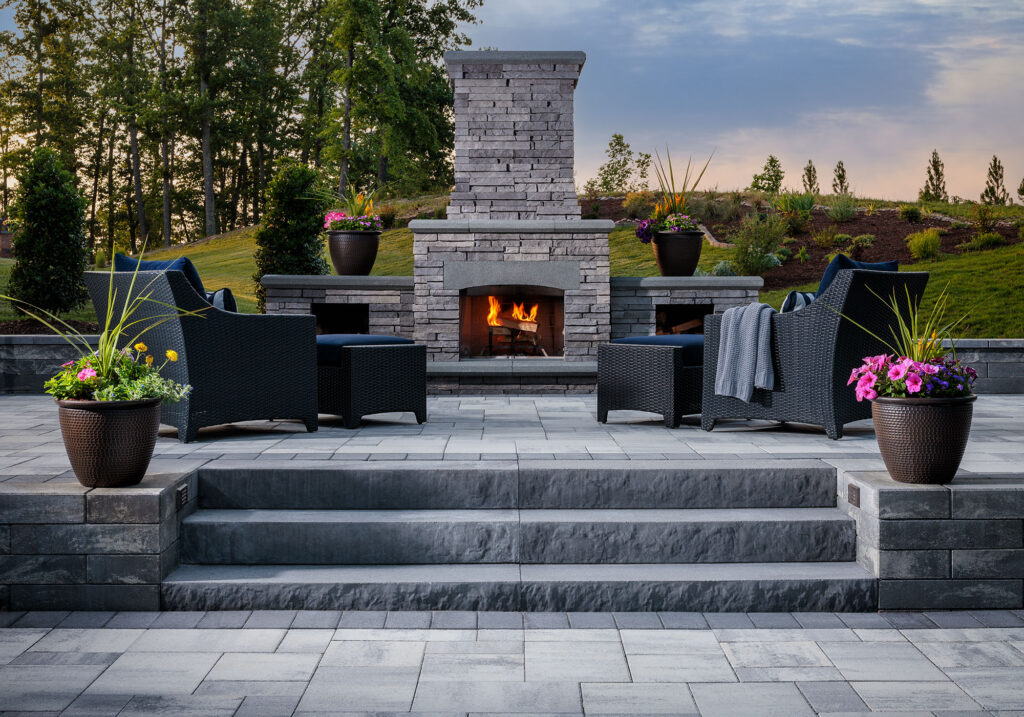
- Outdoor fireplaces — The premium, architectural play. A bigger build with a bigger ticket, designed to deliver a defined focal point and directional warmth for clients who want a true outdoor room.
- Fire bowls — A lower-footprint accent for smaller spaces or clients who want sculptural ambiance over maximum heat output.
Reading the client’s space, style, and budget lets you match the format cleanly — and gives you a natural menu to present rather than a single take-it-or-leave-it option.
Lighting: High Impact, Efficient to Deliver
As daylight fades earlier, lighting becomes the feature that keeps a space usable after dark — and it’s some of the most efficient value-add work you can offer.
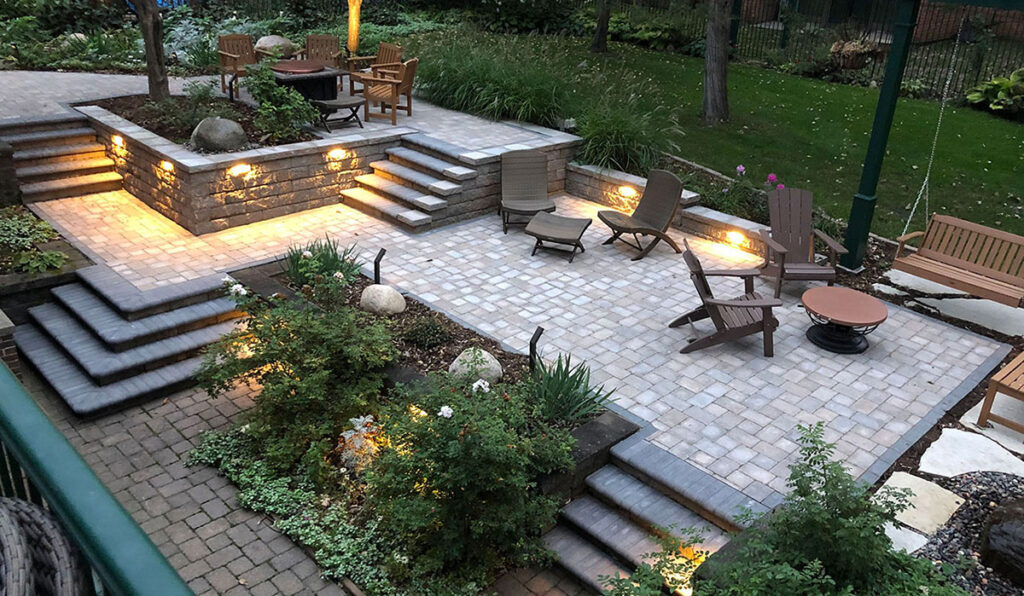
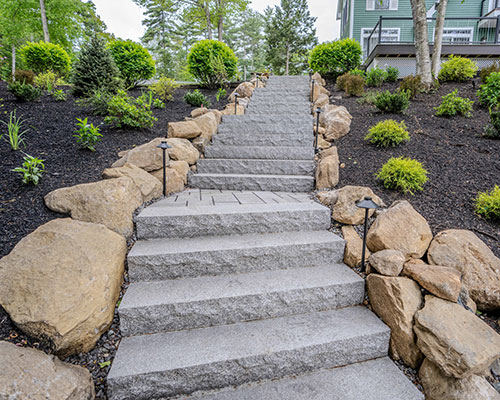
Well-designed lighting does more than illuminate. It sets mood, defines spaces, adds depth, and highlights the craftsmanship of the hardscape you’ve already built. It also delivers on safety, guiding guests along paths and steps as the evenings get darker sooner — a practical selling point that’s easy for clients to understand.
A few angles that make lighting an easy pitch in the back half of the year:
- It showcases your own work. Lighting draws the eye to the walls, steps, and patios you installed. You’re not just adding fixtures — you’re making the whole project look better, day and night.
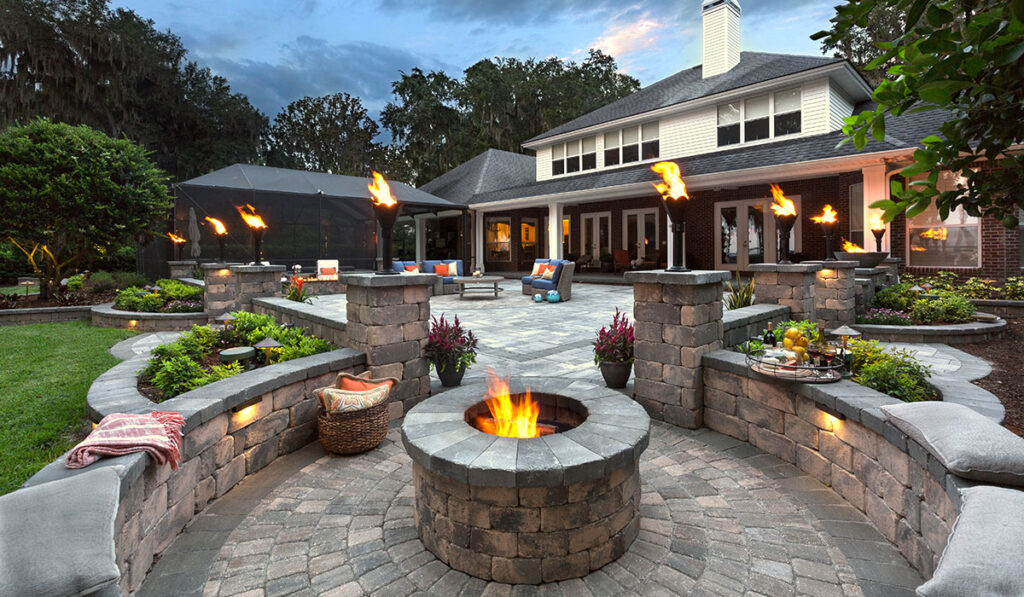
- It layers with fire naturally. Position lighting and fire as a package rather than two separate line items. The combination is what turns a patio into a true evening destination, and bundling raises the value of the job.
- It scales to budget. From a simple path-and-step package to a fully layered landscape lighting design, the scope flexes to meet what the client’s ready to spend.
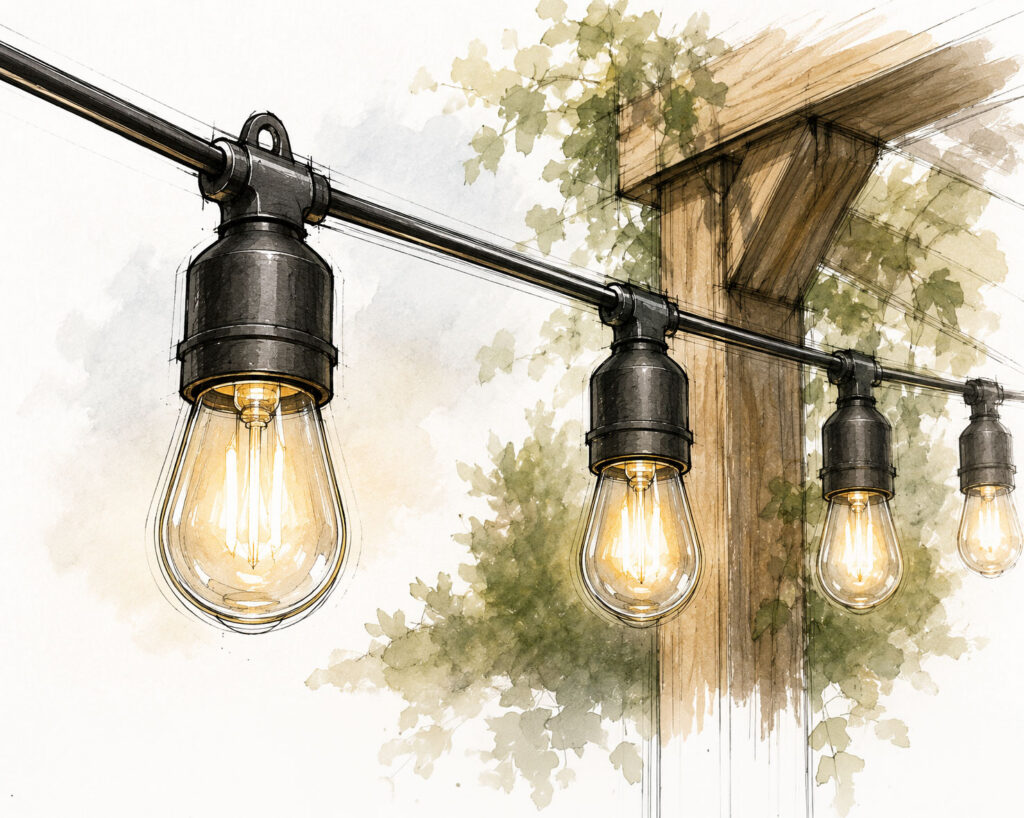
Selling the Package: Position Fire and Light Together
The strongest play isn’t fire or lighting — it’s both, sold as one vision. Fire delivers warmth and a gathering point; lighting delivers atmosphere, safety, and usable hours after sunset. On their own, each leaves a gap. Together, they turn a client’s existing patio into a space that’s comfortable and inviting well into the cool months.
Framed that way, you’re not upselling — you’re completing the picture. The client who spent all summer enjoying their patio gets to keep enjoying it, and you get a higher-value, design-complete project that keeps your crew working through the shoulder season.
Keep the Season Working for You
The slowdown at the end of summer is only as real as you let it be. Fire features and landscape lighting are built for this exact stretch of the calendar — fast to install, easy for clients to say yes to, and a natural next step on every project you completed this year.
Outdoor Living Supply carries what you need to make it happen, and we’re here to help you spec the right options for your clients’ spaces. Stop in, and let’s keep your crews busy well past summer.
The daylight’s getting shorter. The work doesn’t have to.
Visit our Brands page to find a store near you.