
Planning a new driveway, patio, or walkway? Start digging into your options and you’ll quickly run into a pile of contradictory advice about pavers and poured concrete. Some of it is outdated. Some of it is just plain wrong.
The trouble is that these myths can steer you toward a choice you’ll be living with for decades. So we went to the experts. Below, we break down six of the most common paver myths with insight from Robert Bowers, VP of Engineering – Hardscapes at the Concrete Masonry & Hardscapes Association (CMHA).
Myth #1: Pavers Are Weaker Than Poured Concrete
It seems logical. One solid slab should be tougher than a bunch of individual pieces, right? Not quite.
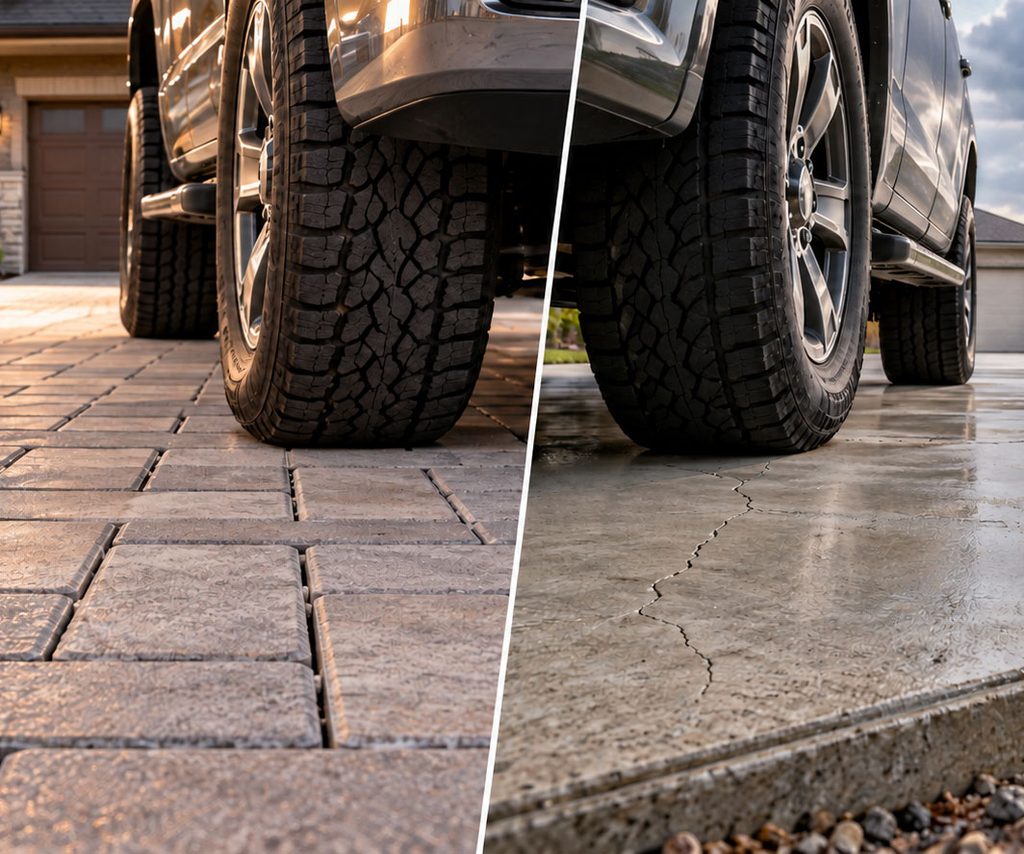
Concrete pavers are made from concrete that’s typically two to three times stronger than a standard poured slab. That’s because pavers are manufactured and cured in a climate-controlled factory, where temperature and humidity can be dialed in for maximum strength. Poured concrete, on the other hand, cures on-site at the mercy of whatever the weather is doing that week.
The way pavers carry weight matters, too.
“From an engineering perspective, we refer to concrete as a rigid pavement system. Pavers, we refer to as semi-flexible.” — Robert Bowers, CMHA
In a paver system, each unit shares the load with its neighbors, so the surface can adapt as the ground beneath it shifts. The result is a driveway or patio designed to stand up to vehicles, foot traffic, and everyday wear.
Myth #2: Pavers Crack More Easily Than Concrete
Here’s the truth about poured concrete: cracks aren’t a possibility so much as a matter of time.
“There’s two types of concrete – concrete that is cracked and concrete that will crack.” — Robert Bowers, CMHA
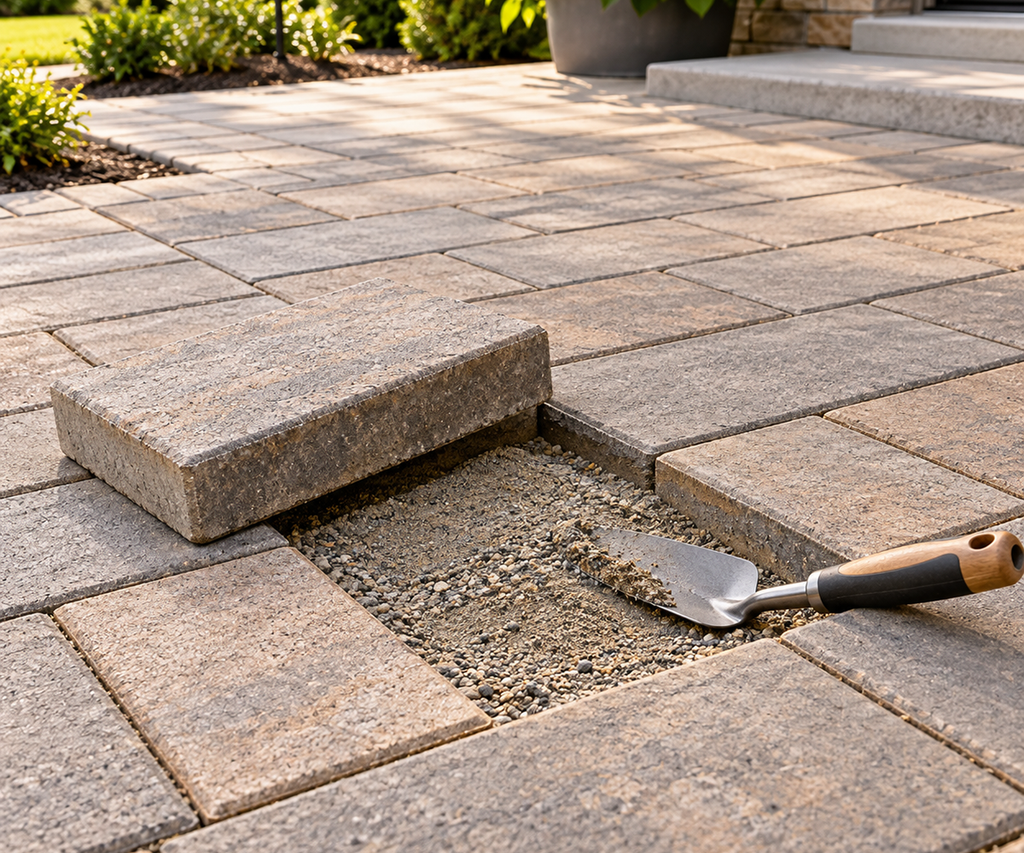
Once a slab cracks, it can no longer pass weight across the damaged area, and the deterioration can snowball from there. Pavers work differently. Because the units work together, a paver surface keeps doing its job even if a little settling happens.
“Even if there is a rut in the pavers, it is still functioning as a viable pavement, and it is still distributing the load.” — Robert Bowers, CMHA
That flexibility is a big deal anywhere winters bring freeze-thaw cycles or soil tends to shift. And if something does move, the fix is simple: lift the affected pavers, adjust the base, and set them back in place. No jackhammers, no mismatched patches.
“Lift the pavers, fill up the aggregate base, level it off, put the pavers back, compact, and nobody’s the wiser that anything happened.” — Robert Bowers, CMHA
Myth #3: Pavers Limit Your Design Options

If anything, the opposite is true. Pavers come in hundreds of shapes, sizes, colors, and textures, and they can be laid in countless patterns. Mix them to create borders, curves, inlays, and medallions, or use different styles to define a dining area from a lounge space.
Many pavers also feature subtle color variation within each piece, giving your project a natural, layered look. Stamped concrete can mimic some of these styles, but the color is usually applied only to the surface.
“The problem is the coloring is applied just to the surface and will wear away or spall off the surface with traffic. Quite often we find that that treatment is not durable.” — Robert Bowers, CMHA
And once stamped concrete is poured, the design is set. Pavers can be rearranged, replaced, or expanded whenever your vision evolves.
Myth #4: Pavers Are High-Maintenance
Let’s clear something up: no outdoor surface is truly maintenance-free.
“Everything we build needs some level of maintenance. But hardscapes are typically low maintenance.” — Robert Bowers, CMHA
Poured concrete starts out easy, but over time it tends to develop cracks and spalling (chipping or flaking on the surface), especially after a few rough winters. Repairs often leave visible patches, and serious damage can mean tearing it all out.
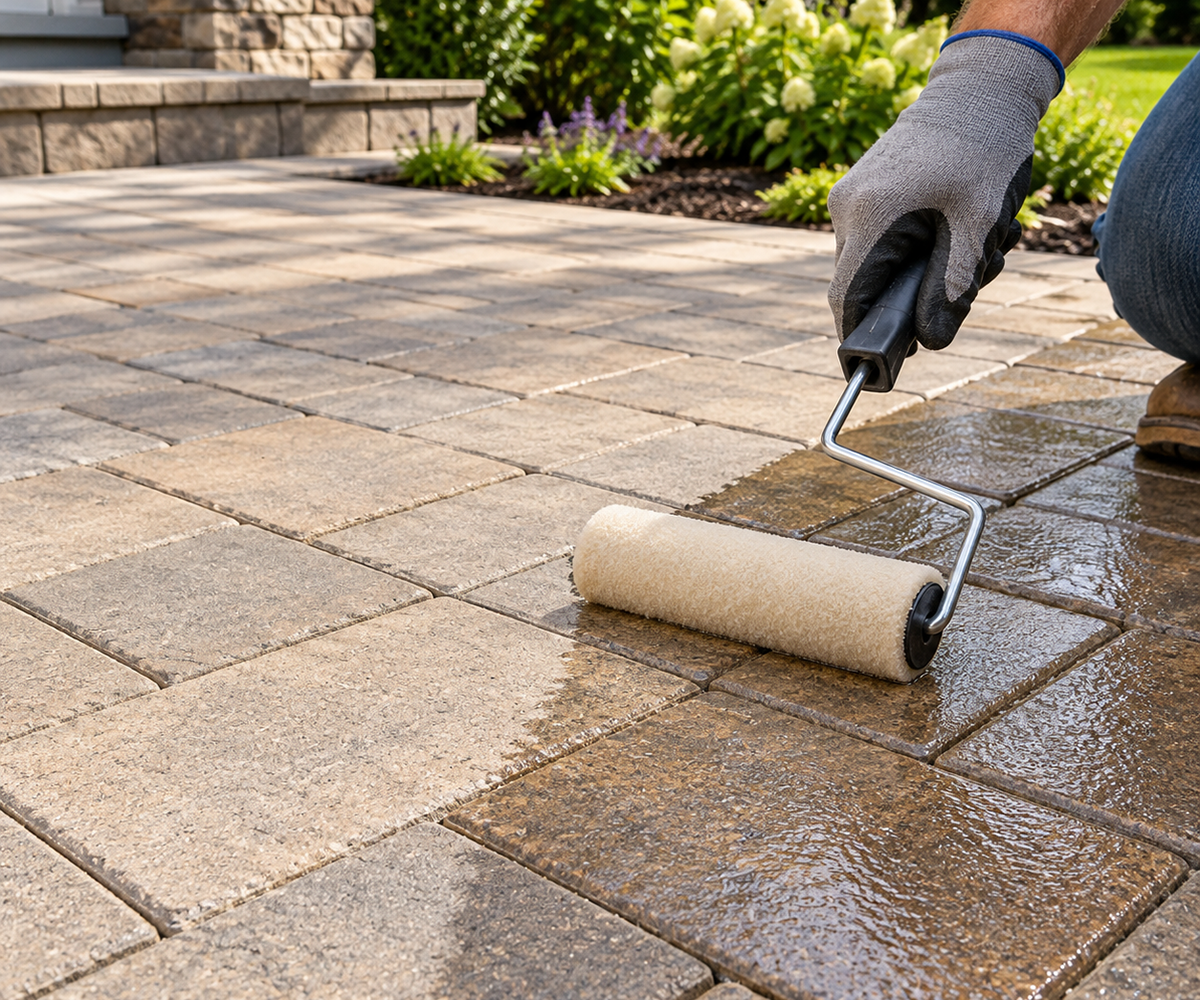
Pavers ask for a little routine care, like sweeping, topping off joint sand, and pulling the occasional weed. But when a repair is needed, individual pavers can be swapped out quickly and seamlessly. Either surface can be sealed to enrich color and make stains easier to clean, just plan to reapply every few years.
Myth #5: Poured Concrete Is Always the Budget-Friendly Choice
Poured concrete often wins on upfront price. But the price tag on day one is only part of the story.
Think about the full life of your driveway or patio. When concrete needs repair, damaged sections have to be cut out, hauled away, and re-poured, and the new concrete rarely matches the old. You’ll also be stuck waiting days for it to cure before you can use the space again.
With pavers, repairs are as simple as lifting a few units, adjusting the base, and putting them back. That repairability and durability can add up to real long-term value.
Myth #6: Pavers Aren’t Environmentally Friendly
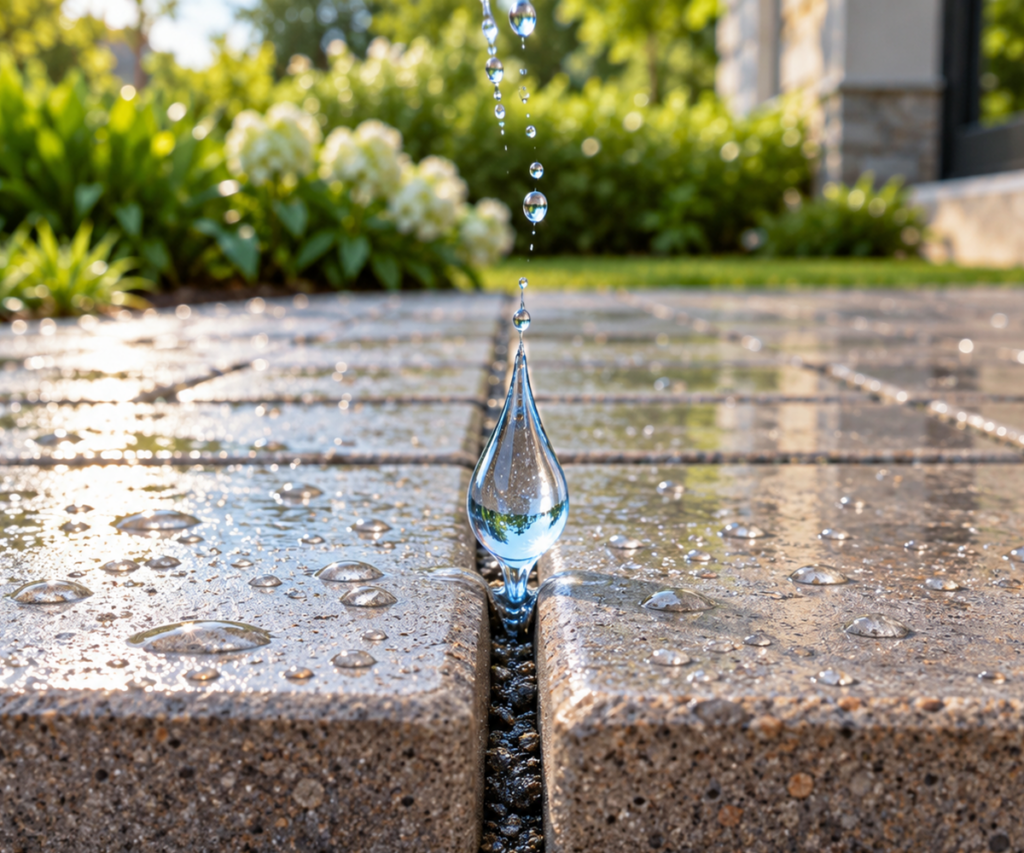
Pavers can actually be one of the more eco-conscious choices out there, especially permeable pavers, which let rainwater soak through the surface instead of running off.
“Permeable pavements mimic our natural wetlands better than any other system that we’ve got. It captures the water. It filters the water. It detains the water and it replenishes our ground water.” — Robert Bowers, CMHA
In areas with stormwater regulations or water restrictions, permeable pavers may even help your property meet local requirements.
And every paver, permeable or not, can be reused. When concrete reaches the end of its life, it typically gets broken up and hauled off as construction waste. Pavers can be pulled up, cleaned, and given a second life somewhere else.
Choosing the Right Surface for Your Home
There’s no shortage of opinions about paving materials. Some are rooted in fact, and others are outdated or just marketing spin. Once you set the myths aside, it’s clear every material has its strengths and trade-offs.
The best choice isn’t about crowning one material the winner. It’s about finding what fits your goals, your climate, and how you want to live in your outdoor space for years to come.
Ready to see your options up close? Stop by any Outdoor Living Supply store near you to explore pavers in the yard, or talk with our team about connecting with a trusted local installer.