
You know the conversation. A client wants a new driveway or patio, but they’ve already done their homework online, and they’re walking in with a few firmly held beliefs about pavers. Too weak. Too much upkeep. Too expensive.
Those assumptions can stall a project or push a client toward a system that isn’t the best fit for their site. The good news is the engineering is on your side. We pulled insight from Robert Bowers, VP of Engineering – Hardscapes at the Concrete Masonry & Hardscapes Association (CMHA), to help you walk clients through six of the most common myths with confidence.
Myth #1: “Pavers Are Weaker Than a Poured Slab”
This one comes down to how the two systems are classified and how they carry load.
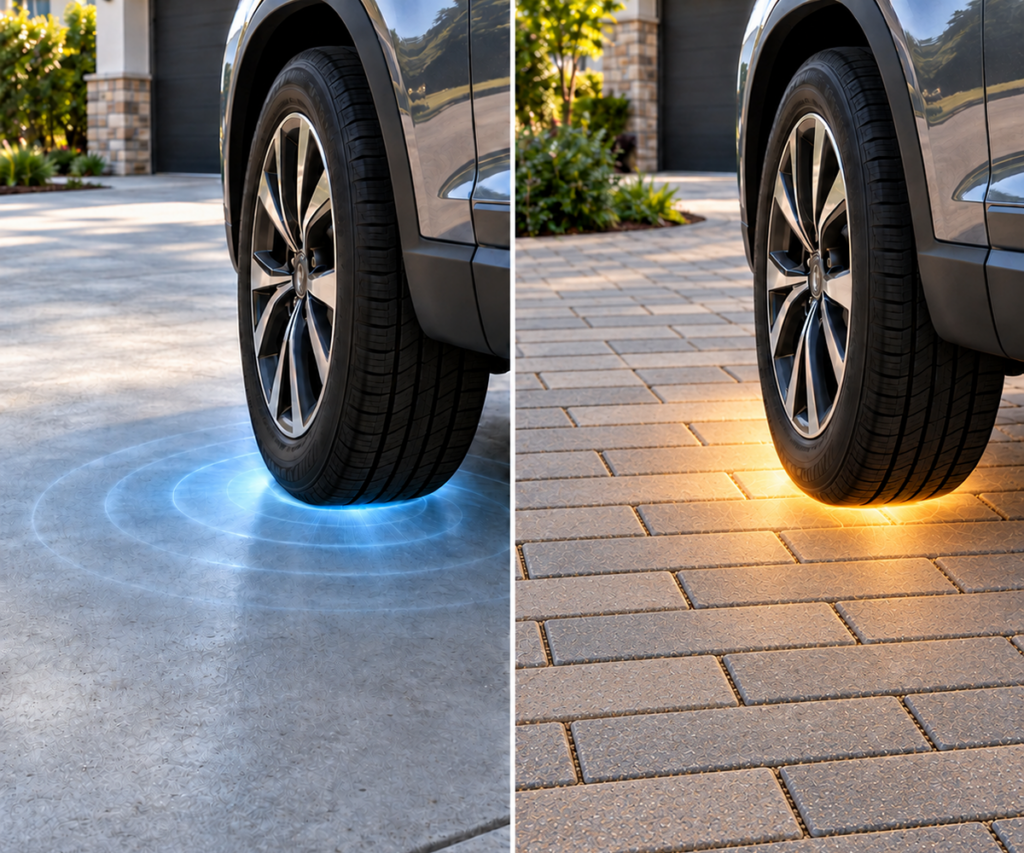
“From an engineering perspective, we refer to concrete as a rigid pavement system. Pavers, we refer to as semi-flexible.” — Robert Bowers, CMHA
A poured slab spreads weight across a large area as a single rigid unit, which allows for thinner pavement sections. A paver system transfers load between neighboring units, so the surface can adapt to movement in the subgrade.
Then there’s the material itself. Concrete pavers are typically manufactured at two to three times the compressive strength of standard poured concrete. Factory production and curing give manufacturers control over temperature and humidity, conditions that are hard to match on a jobsite, even with plastic or thermal blankets.
Client talking point:
Pavers start stronger and are designed to work as a system that flexes with the ground rather than fighting it.
Myth #2: “Pavers Will Shift and Crack”
Every pro knows how this one goes for concrete.
“There’s two types of concrete – concrete that is cracked and concrete that will crack.” — Robert Bowers, CMHA
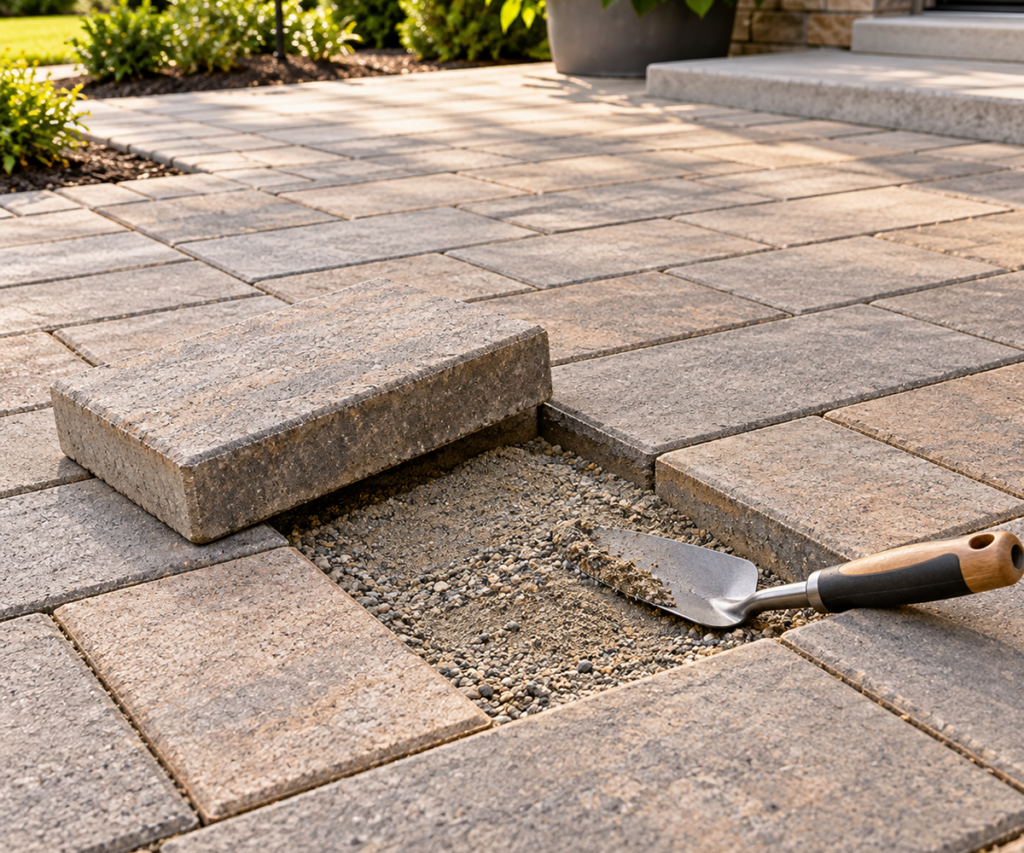
When a slab cracks, it loses load transfer across the break, which can accelerate deterioration. A properly installed paver system keeps functioning through minor settlement because the units continue to work together.
“Even if there is a rut in the pavers, it is still functioning as a viable pavement, and it is still distributing the load.” — Robert Bowers, CMHA
That semi-flexible behavior is a real advantage in freeze-thaw regions and on sites with active soils. And when a repair is needed, it’s a straightforward service call instead of a demo job.
“Lift the pavers, fill up the aggregate base, level it off, put the pavers back, compact, and nobody’s the wiser that anything happened.” — Robert Bowers, CMHA
Client talking point:
Movement doesn’t mean failure with pavers, and repairs are designed to be invisible.
Myth #3: “Pavers Box In the Design”
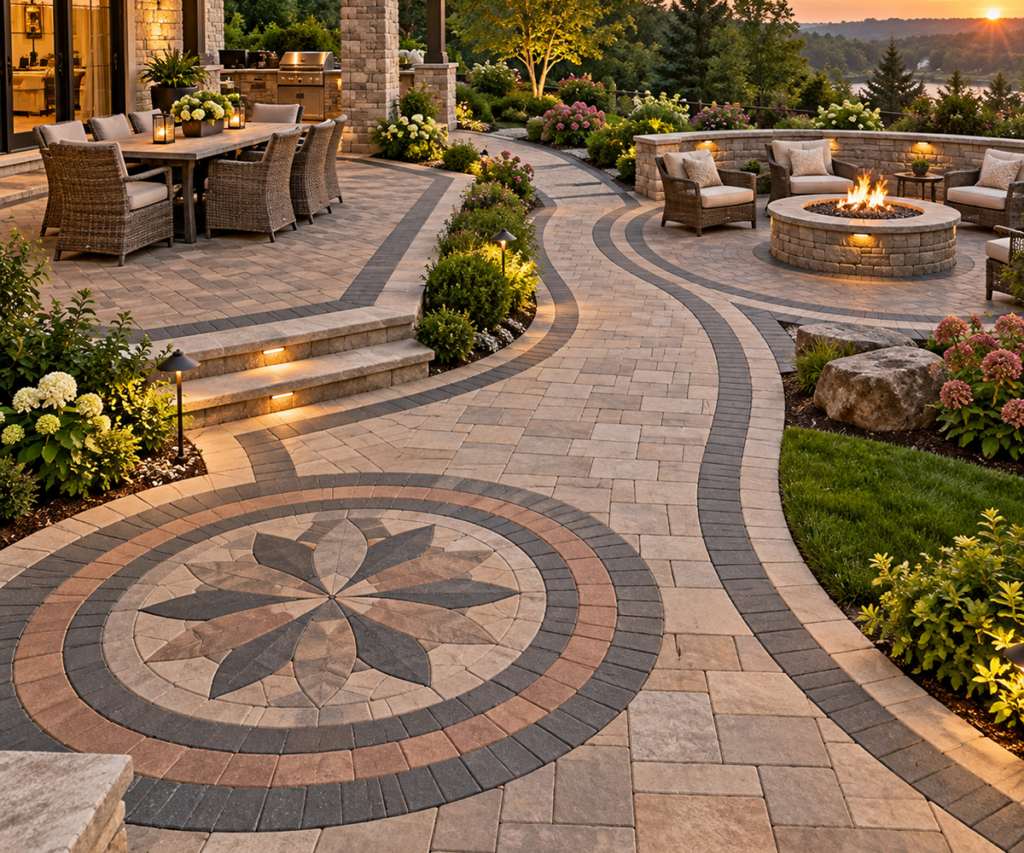
This is where pavers give you the most room to differentiate your work. With hundreds of shapes, sizes, colors, and textures available, you can build borders, banding, curves, inlays, and medallions, or combine styles to define zones like a dining area, walkway, and fire pit space.
Many units also feature blended color within each piece, and some systems pair smooth and textured finishes in a single installation. Clients who are comparing pavers to stamped concrete may not realize how much of that look lives only at the surface.
“The problem is the coloring is applied just to the surface and will wear away or spall off the surface with traffic. Quite often we find that that treatment is not durable.” — Robert Bowers, CMHA
Client talking point:
A paver design can be expanded, reworked, or updated later, opening the door for future phases of the project.
Myth #4: “Pavers Are a Maintenance Headache”
Set expectations honestly here. Every surface needs some care.
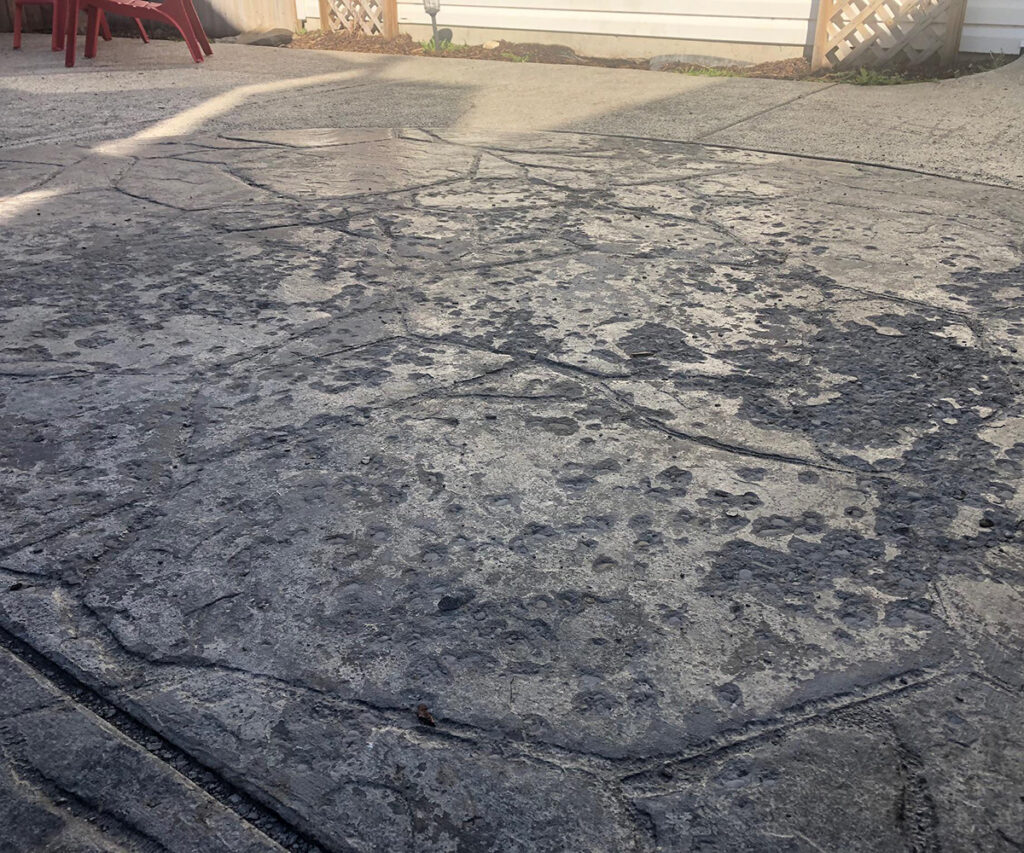
“Everything we build needs some level of maintenance. But hardscapes are typically low maintenance.” — Robert Bowers, CMHA
Poured concrete is easy early on, but cracking and spalling tend to build over time, especially through freeze-thaw cycles. Repairs often leave visible patches, and major damage can mean full replacement.
Pavers call for routine upkeep: sweeping, re-sanding joints, and weed control. When something needs attention, individual units can be pulled and reset without disrupting the rest of the surface. Sealer is an option for either system to enhance color and help with stains, with reapplication every few years.
Client talking point:
Maintenance on pavers is simpler and less disruptive, and repairs keep the surface looking like the original install.
Myth #5: “Concrete Is Always Cheaper”
On initial install cost, poured concrete often comes in lower. The conversation worth having with clients is about lifecycle value.
Concrete repairs mean saw-cutting, disposal, re-pouring, and cure time before the surface is usable again, plus patches that rarely match. Paver repairs come down to lifting units, correcting the base, and resetting them.
Client talking point:
Factor in repairability and service life, and pavers can deliver stronger value over the long haul.
Myth #6: “Pavers Aren’t a Sustainable Choice”
Permeable Interlocking Concrete Pavement (PICP) is one of the strongest answers here, and a growing opportunity for your business.
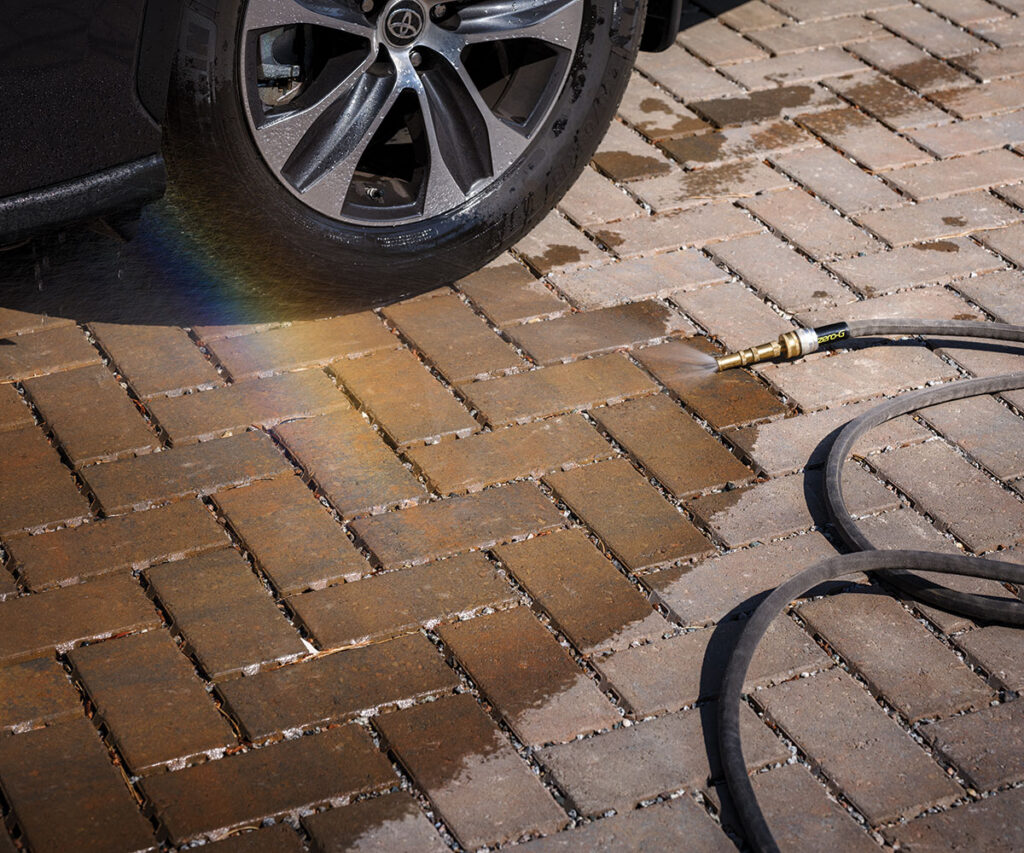
“Permeable pavements mimic our natural wetlands better than any other system that we’ve got. It captures the water. It filters the water. It detains the water and it replenishes our ground water. It provides a lot of the functions a wetland does.” — Robert Bowers, CMHA
Where municipalities have stormwater management requirements or water restrictions, permeable systems can help properties meet code while still delivering a finished, high-end look.
Standard pavers bring a sustainability story of their own: reuse. At end of life, a slab typically requires heavy equipment to remove and becomes construction waste. Pavers can be pulled, cleaned, and reinstalled elsewhere.
Client talking point:
Pavers are designed to be reused, and permeable options can help manage stormwater on site.
The Right System for the Job
Poured concrete and pavers each have their place, and every site, budget, and client brings different priorities. Your expertise is what turns a myth-driven decision into an informed one.
When clients understand how each system performs over time, they’re better equipped to choose the surface that fits their property, climate, and expectations for maintenance and longevity.
Need samples for your next client meeting? Stop by any Outdoor Living Supply store see what’s in the yard, or connect with our team to talk through your next project.